Monday, April 8, 2013

Knowledge by Eleanor Farjeon

“Knowledge”
by Eleanor Farjeon

Your mind is a meadow
To plant for your needs;
You are the farmer
With knowledge for seeds,

Don't leave your meadow
  Unplanned and bare,
Sow it with knowledge
And tend it with care.

Who'd be a know-nothing
When he might grow
The seeds of knowledge
Of stars and snow;

The science of numbers,
The stories of time,
The magic of music,
The secrets of rhyme?

Don't be a know-nothing!
Plant in the spring,
And see what harvest
The summer will bring. 


About Poet:

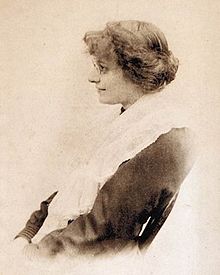
Eleanor Farjeon (13 February 1881- 5 June 1965) was born in London, England. She was a small timid child, who had poor eyesight and suffered from ill-health throughout her childhood. She was a
gifted writer. She wrote countless plays, poems and stories for children, many of which achieved international recognition. She died in Hampstead, London.  

Summary: In the poem knowledge, the poet compares the human mind with a meadow and with a farmer. A farmer likes to sow seeds and plant things and look after it with care. A good farmer doesn’t like to see bare land.

The poet wants to convey the message that we should not keep our minds empty. Like a good farmer, we should plant the seeds of knowledge in our minds, which will grow and develop like the seeds and plants in a farmer’s meadow. The seeds of knowledge can be about nature or science, history, math, music and literature. If we keep our minds busy through reading we are sure to gain wisdom and knowledge, like a farmer harvesting his crops in the summer.

Md. Saiful Alam
BA Honours (English), MA (English) and BEd (1st Class)
Assistant Teacher of English 
Machkhol Secodnary School, Satkhira Sadar, Satkhira

 My affectionate Readers,
Please, never hesitate to comment because your comment inspired me much. Moreover, any correction or suggestion regarding my writings will be largely appreciated and valued and you can ask me any grammatical questions regarding English. I promise I would try my level best to assist you, all. Thank you very much.
 

Wednesday, April 3, 2013

The Symbols in “Anna Karenina”

Question: Write a note on the symbols in “Anna Karenina” by Leo Tolstoy

            Answer: “Anna Karenina” is the Russian novel in English composed by Leo Tolstoy, a distinguished Russian novelist. A symbol is usually something concrete – an object, a place, a character, an action – that suggests something abstract and universal. In other words, a symbol stands for something else in literature. Here in the novel, the novelist uses symbols in a dynamic way. He uses them to convey his expected meaning to his readers. Here in the novel, the major symbols he uses are: Vronsky's racehorse, Levin and Kitty's marriage, trains, the sale of the forest by Oblonsky and so on.
            Vronsky's racing horse is one of the most important symbols in “Anna Karenina”. The expensive horse is a clear symbol for the relationship between Anna and Vronsky. The horse appears in the novel just shortly after the relationship between Anna and Vronsky has become serious. However, learning about the dangers in the officer's race, Vronsky decides to continue the race despite the death of several horses and riders in the event. Vronsky's willingness to confront the dangers creates another connection between the horse and Anna. The horse also represents Anna's strength and courage while showing that she is under Vronsky's control. Although Vronsky faces the dangers by entering the horse in the race and continuing his affair with Anna, both the horse and Anna face a greater threat because they would die soon. In the end, the horse dies and the unfair death of the horse foreshadows and symbolises Anna's tragic death.

            Levin's courtship and marriage to Kitty is of paramount importance to Anna Karenina. Tolstoy frames the marriage as a stubborn individualist's commitment to another human being with all the philosophical and religious meaning. Levin is an alienated man throughout the early part of the novel. His views alienate him from noblemen and peasantry alike. He is frustrated by Russian culture and unable to feel comfortable with European ways. He suffers from an inferiority complex, as it is seen in his self-doubts in proposing to Kitty. Devastated by Kitty's rejection of his marriage proposal, Levin retreats to his country estate and renounces all dreams of family life. We wonder whether he will remain an eccentric isolationist for the rest of his days, without family or nearby friends laboring over a theory of Russian agriculture. But when the flame of Levin's and Kitty's love suddenly rekindles leading to marriage, it represents more than a mere engagement. Rather, the marriage is an affirmation of Levin's connection with others and his participation in something larger than himself and he attains the cornerstone of the religious faith after marriage. Although he is cynical toward religious dogma, during his confession, the priest asks him a set of questions that lead him through a crisis and then to spiritual regeneration. So it is his marriage with Kitty that regenerates him.

            Trains are the most important symbols in the story of “Anna Karenina” due to their prominence in the Anna or Vronsky story line. More specifically, trains are a destructive element throughout the novel. Vronsky and Anna first meet at a train station where a drunken guard is crushed to death. So Anna calls the death an omen of evil because her first encounter with Vronsky is thus overlaid with the specter of death. Again, Vronsky too uses a train as the engine of his death as it carries him to a war which will bring him death. Thus the train is shown in a negative light in the novel. The train also symbolises not only the destruction of Anna and Vronsky, but Russia's old way of life in favour of an industrial capitalist system. It is symbolic as transportation too, which takes Anna away from her duties and responsibilities as Madame Karenina.

            The hasty sale of the forest in the novel by Oblonsky is symbolic too. He inherits it during his marriage with Dolly. Oblonsky is a sensuous man in the novel who is caught red handed by his wife involved in love making with a French governess. After the incident, he is planning to sell the forest but cannot without the consent of his wife, Dolly. Later on he decides to sell it. The sale of the forest symbolises the loss of emotion, love and respect for the most valuable gifts or property left by their forefathers but the gifts have no value to the Oblonsky as he does not feel any longing for it.


Md. Saiful Alam
B. A. Honours and M. A. in English
Lecturer of English
Queen’s College, Dhaka
My affectionate Readers,
Please, never hesitate to comment and any correction or suggestion regarding my writings will be largely appreciated and valued and you can ask me any grammatical questions regarding English. I promise I would try my level best to assist you, all. Thank you very much.


The Themes in the novel “Anna Karenina”

Question: ( 2 ) : Describe the themes in the novel “Anna Karenina” by Leo Tolstoy
             Answer: Theme that lies in a text is one of the most important issues in a literary composition that convey some universal ideas and truth. Here in the novel titled “Anna Karenina”, written by a Russian novelist, Leo Tolstoy, exposes several dominating themes as social change in 19th Russia, the blessing of family life, the role and position of women in society, marriage and philosophical value of farming. However, they have been described below one after another in brief.
            In the Russia of “Anna Karenina”, a battle rages between the old patriarchal values sustaining the landowning aristocracy and the new, liberal—often called “libre penseur” or the followers of the Westernises. The conservatives believe in traditions like serfdom and authoritarian government, while the liberals believe in technology, rationalism, and democracy. For example, we see Levin’s clash with his peasants when he ties to introduce Western agricultural innovations that his peasants refuse to accept. They are scared that new innovations will make them jobless as it will replace human beings. Moreover, the guests at Stiva’s dinner party raise the question of women’s rights—clearly a hot topic of the day, and one that shows the influence of Western social progress on Russia. The Russian tradition of arranged marriages is going out of fashion, though Kitty’s parents are not sure at the prospect of allowing Kitty to choose her partner.

            Tolstoy’s intention to write “Anna Karenina” is to recognise this novel in the genre family novels popular in Russia although this type of novels is out of fashion by the 1870s. The Russian family novel often portrays the benefits and comforts of family togetherness and domestic bliss in a much idealised way. Tolstoy has written “Anna Karenina” in the past as his personal statement of family debate. The first section of the novel concerning the happiness and unhappiness of families underscores the centrality of this idea. The novelist takes a pro-family position in the novel that is candid the difficulties of family life. A family limits the freedom of the individual yet despite the resections on personal liberty, Tolstoy portrays family life as a source of comfort and happiness and philosophical transcendence. Anna destroys her family and dies in misery whereas Levin and lives happily creating a family.

            In “Anna Karenina” Tolstoy brings out the position of women in the society where Anna’s marriage to Karenin is arranged by her relatives following the social custom although there is no passion with Karenin but she is bound to live with her husband. Love that Anna needed and desired is never a factor in this match. Anna’s emotional delicacy that has suffered and frustrated her in her marriage is bound to transform her love for her son although Anna finds this marriage hypocritical but there is no other solution for her as women do not possess any voice in society. According to Tolstoy, the role of women is to make a family by giving birth and raising children but not for personal pleasure but Anna refuses her social role and elopes and lives with Vronsky.

            Tolstoy presents portraits of marriage that are astonishing for their lack of romance. Although these women are princesses, baronesses and countesses, there are no fairy-tale endings in “Anna Karenina”. Instead, marriage is portrayed with all of its faults and problems, from jealousy to lack of passion to abandonment. Tolstoy does not advocate the ending of marriage as a social institution at all indeed, he believes it is the glue that holds societies together, but he is realistic about how it works. The only fully successful marriage in Anna Karenina is between Levin and Kitty, and it only becomes that way when they understand that a man and a woman occupy separate social roles, and that it is necessary for a couple to give each other space.

            Tolstoy brings the parallel plot of Levin and Kitty through which he presents his ideal society. Through his spokesman Levin shows that he is a devoted farmer who achieves a clear vision of faith and happiness. Levin in his farm establishes a social structure that is very close to socialist government. However, he distributes his lands among his peasants and worked equally hard along with them. He also establishes schools to educate the peasants’ children and takes other initiatives that establish other fundamental rights and privileges for the peasants.


Md. Saiful Alam
B. A. Honours and M. A. in English
Lecturer of English
Queen’s College, Dhaka
My affectionate Readers,
Please, never hesitate to comment and any correction or suggestion regarding my writings will be largely appreciated and valued and you can ask me any grammatical questions regarding English. I promise I would try my level best to assist you, all. Thank you very much.


Friday, March 22, 2013

The Rise of English by Terry Eagleton A Brief Summary


“The Rise of English”- by Terry Eagleton

In eighteenth-century England, literature was considered to be that which conformed to the standards of ‘polite letters’, meaning that which embodied the values and tastes of the upper classes (usually).  After the bloody civil war of the previous century, literature became even more important in bringing the middle classes into unity with the upper classes.


Literature, in the modern sense, really emerged around the nineteenth century during the Romantic period; the idea that literature is something imaginative or inventive while prosaic writing is dull or uninspiring is a relatively new concept in history.

During the Romantic period, types of literature like poetry no longer were simply a technical way of writing, they had significant social, political, and philosophical implications (many major Romantic poets were political activists themselves).  The stress upon the sovereignty and autonomy of the imagination was another emphasis finding its way into the concept of literature.  The rise of the ‘symbol’ also came towards the end of the eighteenth century; with it, various contradictory concepts could finally be captured together.

Literature, as defined by Eagleton earlier, is an ideology.  Eagleton suggests that the growth of English studies in the later nineteenth century was caused by the failure of religion, something he believes was a very simple yet powerful form of ideology that was above all else a pacifying influence.  Apparently, English literature worked as a suitable replacement.  English became a subject used to cultivate the middle class and infuse them with some values of the leftover aristocracy; thus English literature became the new way to pacify the working and middle classes.  Literature would convey timeless truths and distract the masses from their present commitments and conditions; it was also a way to experience things or events that were not possible to experience in a person’s life.  English as an academic subject was nothing more than the poor man’s Classics.  In addition, English became the new vehicle for transferring the moral law, which was no longer taken from religion.

Because English was not exactly considered a ‘real’ subject, it was often given to the ladies of higher learning institutions when were now grudgingly admitting women; however, as the century drew on, English took on more of a masculine aspect.  It still took a while for the study of English to be taken seriously, but finally English literature came into power, mostly because of wartime nationalism.  The new subject was created by the offspring of the bourgeoisie, rather than those who currently held social power.

Now the study of English was ‘in’, and people may have wondered how it had ever been otherwise.  Deep and intense questions became subject to the most intense scrutiny.  Literature was also perhaps the only place where creative language was allowed to flourish.  In addition, those studying felt that they were a part of a larger movement that was moving civilization back to the way it should have been, as in the seventeenth century.

“Scrutiny” didn’t seek to change society in any way; rather, their goal was to withstand it.  Teaching children about the corrupt culture they lived in was very important, instead of making them memorize pointless passages of literature.  Eagleton said that the Scrutiny project was “hair-raisingly radical and really rather absurd.”  In the end, Scrutiny was simply a project of the elitists.  The ‘organic’ society desired by Scrutiny was unobtainable, nothing more than a lofty desire to reclaim the golden days of the past.

Some types of English were considered more English than others, which ironically reminds one of the types of arguments given by the upper class before.  When T.S. Eliot came to England, he upgraded the status of the poets and dramatists while toppling Milton and the Romantics.  Literature becomes that which has the Tradition flowing through it; all poetry may be literature, but not all poetry may be Literature.  Eliot thought that middle-class liberalism had failed in light of the war, and a poet must develop a new type of sensory language in poetry that would speak to a person’s senses rather than their intellect.  Many contradictions began showing up in the ideas that the ‘big wigs’ of Literature of that day came up with.

Practical criticism meant a method that was unafraid to take a text apart, but also assumed that you could judge literary greatness by focusing on pieces of poetry or prose isolated from their cultural contexts.  Close reading also mean detailed analytic interpretation, but also seemed to imply that former methods of criticism read only three words per line.  Also assumed that any literary work could be understood in isolation from its context.

Richards, an advocate of modern science, felt that, even though he himself felts questions such as ‘what?’ or ‘why?’ were not valid, if pseudo-answers were not given to such pseudo-questions, society would fall apart.  Poetry’s role is to supply such answers.

American New Criticism was deeply marked by the doctrines that organizing lawless lower human impulses more effectively will ensure the survival of the higher finer ones (not too dissimilar from the old Victorian belief that organizing the lower classes will ensure the survival of the upper ones).  New Criticism was not too different from Scrutiny: it reinvented in literature what it couldn’t find in reality.  They came up with something called the Great Man theory of literature, which says that even if the author’s intentions in writing were recovered, they were of no relevance to the interpretation of his or her text.  At the same time, neither could the emotional responses of readers be confused with the poem’s true meaning.  Ultimately, reading poetry in the New Critical way meant committing yourself to nothing, a rejection of anything in particular.

Special Note: “The Rise of English” is an outstanding essay where Eagleton surveys how the concept of literature as we understand today has developed, how its studies have begun academically and how literary criticism in English has evolved. He discloses the capitalist motif behind using English as an academic discipline in British colonies. As a post-modern theorist, Eagleton elaborately discusses the drawbacks of New Criticism and paves the way forward to look at the literary texts with newer insight. However, in the essay “The Rise of English” he criticises the theoretical development in the English up to the New Criticism phase.

Friday, March 15, 2013

Robinson Crusoe as a religious or spiritual allegory


Question: 1. Robinson Crusoe is a religious or spiritual allegory - justify your answer.

Answer: Apart from being an exciting account of a man’s adventures on an uninhabited island, the book, “Robinson Crusoe” has been found to possess a profound allegorical significance. For many, Crusoe's many references to God, to Providence, to sin are extraneous to the real interest of the novel. Readers through the 19th century read “Robinson Crusoe” in the light of religion. For example, a reviewer for the Dublin University Magazine called the book a great religious poem, showing that God is found where men are absent. In deciding whether or to what extent Robinson Crusoe is a spiritual autobiography and a great religious poem, one might consider the following:

In the "Preface," Defoe announces that his intention is to justify and honour the wisdom of Providence in all the variety of our circumstances.
Moreover, Robinson Crusoe can be viewed from theological and practical levels. If we see from the theological level, we will find that man's extreme aspiration is the cause of sin. As we see in “Paradise Lost” by John Milton that Adam and Eve are banished from the Heaven because of their aspirations and disobedience to God, here in the same was Crusoe is thrown on an uninhabited island because of disobedience towards his father.

Crusoe receives warnings against the rashness of going to sea from his father and from the captain of the first ship he sails on. Both are figures of authority and can be seen as proxies for God. In ignoring their warnings, he is also denying God's providential social order in the world. God's providential social order in the world means that God arranged the world hierarchically, endowing the king with authority in the political realm and the father with authority in the family.

Crusoe's conversation with his father about leaving home can be interpreted from a religious perspective. Crusoe repeatedly refers to leaving home without his father's permission as his "original sin"; he not only associates God and his father but regards his sin against his father as a sin against God also. Remembering his first voyage,

Crusoe comments:
"...my conscience, which was not yet come to the pitch of hardness to which it has been since, reproached me with the contempt of advice and the breach of my duty to God and my Father" (5).

 In the Puritan family structure, the father was regarded as God's deputy; in rejecting his father's advice, Crusoe is committing Adam and Eve's sin of disobedience. For Crusoe, as for Adam, and Eve, disobedience grows out of restlessness and discontent with the station God assigned.

When Crusoe is cast ashore on a deserted island, he sees his situation as the fulfillment of his father's prediction that if Crusoe disregarded his advice, Crusoe would find himself alone with no source of help. As his father said with a little sigh,

“That boy might be happy if he would stay at home; but if he goes abroad,
he will be the most miserable wretch that ever was born”.Alone on the island, Crusoe is Everyman, alienated from God because of sin.

One way of reading Robinson Crusoe is as a spiritual autobiography. The spiritual autobiography portrays the Puritan drama of the soul. Concerned about being saved, having a profound sense of God's presence, seeing His will manifest everywhere and aware of the unceasing conflict between good and evil, Puritans constantly scrutinized their lives to determine the state of their souls and looked for signs of the nature of their relationship with God. The spiritual autobiography usually follows a common pattern: the narrator sins, ignores God's warnings, hardens his heart to God, repents as a result of God's grace and mercy, experiences a soul-wrenching conversion, and achieves salvation. The writer emphasizes his former sinfulness as a way of glorifying God; the deeper his sinfulness, the greater God's grace and mercy in electing to save him. He reviews his life from the new perspective his conversion has given him and writes of the present and the future with a deep sense of God's presence in his life and in the world. Here we also find the touch of spiritual autobiography.

Crusoe throughout uses religious language, imagery, and Biblical references. Crusoe narrates his life story long afterward, and from the beginning of his tale, Crusoe presents events not only from his point of view as a youth but also from a Christian perspective; he looks at his past through the eyes of the convert who now constantly sees the working of Providence. He tells of his first shipwreck and of his then ignoring what he now perceives as God's warning, "... Providence, as in such cases generally it does, resolved to leave me entirely without excuse. For if I would not take this for a deliverance, the next was to be such a one as the worst and most hardened wretch among us would confess both the danger and the mercy" (7). And he found “the secret hints and notices of danger" (244)

After his dream and the beginning of his regeneration, Defoe reviews his life and his understanding and sense of God deepen. But reason alone is not sufficient to result in conversion and Crusoe turns to the Bible; studying it reveals God's word and will to him, and he finds comfort, guidance, and instruction in it. For the first time in many years he prays, and he prays, not for rescue from the island, but for God's help,

"Lord be my help, for I am in great distress" (88).

 After thinking about his life, he kneels to God for the first time in his life and prays to God to fulfill his promise "that if I called upon Him in the day of trouble, He would deliver me" (91). His next step toward conversion is asking for God's grace, "Jesus, Thou Son of David, Jesus, Thou exalted Prince and Saviour, give me repentance!" (93). He comes to realize that spiritual deliverance from sin is more important than physical deliverance from the island. A little later, when he is about to thank God for bringing him to the island and so saving him, he stops, shocked at himself and the hypocrisy of such a statement. Then he "sincerely gave thanks to God for opening my eyes, by whatever afflicting Providences, to see the former condition of my life, and to mourn for my wickedness, and repent" (110). This incident indicates that Crusoe's faith is fervent and honest.

In short we can say that Defoe’s “Robinson Crusoe” is a great religious allegory. This shows the inner conflict of Crusoe and portrays the Puritan drama of the soul. This follows the pattern of “Sin → Punishment → Realization → Redeem → Salvation”.

The Hairy Ape as a modern tragedy


Question: 1. “The Hairy Ape” as a modern tragedy – justify your answer.

Answer: The representation of tragedy today has adapted itself to more humanistic, base and symbolic concerns. Often, they are commentaries on society just as much as they are on the nature of man. Eugene O'Neill's greatest creation “The Hairy Ape” dramatises the vision of the tragic and alienated condition of men in the modern complex social system. The play symbolises the struggle of modern men within industrial society following an individual's (Yank) baffled search for identity, to recover his sense of belongingness by overcoming his sense of isolation or alienation from society. The play concludes with resignation at the tragic end of that quest.

“The Hairy Ape” is a tragedy of modern times, having no conventional hero of the classical or Aristotelian tradition. The play presents an antihero, possessing no extraordinary quality or tragic flaw. The protagonist, Yank (Real name Bob Smith) is not a man of high position like Oedipus of Sophocles; rather he is an everyman character. He is a humble stoker in a ship whose duty is to shove fuel into the furnace of ship's engine. He works long hours in the ship’s low roofed stokehole.

He is beastly, filthy, and coarse. He is a burly, sometimes menacing figure who has difficulty with thought. He is potent, proud and dominating, and considers physical strength as the lifeblood of his universe. He feels proud being an integral and vital part of the ship's motion and loves his work and the ship more than the others. He is the dominating figure among the stokers by virtue of his superior physical power. He is complacent, happy and satisfied with his present condition as a stoker with a sense that he belonged to the ship, he is something, and his co-workers were his social mates.

He does not have any tragic flaw, but he suffers and faces demise because he is in conflict with his environment, with certain social forces that are much stronger than him. He struggled hard against the forces but he cannot win. Mildred Douglas's reaction to Yank is the catalyst which makes Yank come to class awareness. Yank is especially affected by Mildred because she presents a world and class which he cannot belong to. Her remark shakes the very foundation of his sense of well being, his feeling that he was the necessary and vital part of a social system. He feels very much insulted because Mildred does not respect or even value the essentiality of his role in a small world of stokehole. Like Adam he is aware of his own nakedness and must leave the garden. The illusion of belonging drops away and he becomes aware that he is fatally caught between earth and heaven. He feels utterly alianated from society and identifies himself as an outsider who does not deserve to belong here.

Obsessed by excessive anger Yank decides to avenge the rich girl by killing her. He visits the Fifth Avenue to fulfill his resolution. He attacks people there and is put into prison, where he comes to feel that he is a hairy ape. After his release from the prison he visits a zoo where tries to befriend a gorilla whom he addresses as ‘brother’ and tries to embrace him. The gorilla crushes him and throws him into the cage. Yanks dies there miserably like an animal. After his demise the writer comments that at last he found his identity and knows where he belongs.

Throughout this struggle Yank defines ‘belonging’ as power. When he thinks he ‘belongs’ to something he gains strength, when Yank is rejected by a group, he is terribly weak. However, Yank is rejected by all facets of society: his fellow firemen/stokers, Mildred, the street goers of Fifth Avenue, the I.W.W., and finally the ape in the zoo. Yank symbolises the struggle of modern man within industrial society—he cannot break class or ideological barriers, nor create new ones.

“The Hairy Ape” is a penetrating and concentrating tragedy on human predicament in the modern age. The subtitle ‘A Comedy of Ancient and Modern Life’ is merely ironical. It points the satirical intent of the playwright. The rich class might look at it as comedy because a beastly man dies. But the playwright’s intent is that we should think over the question, why such a powerful man belonging to the working class dies. He is a victim of the mechanical social system. His death should arouse pity and sorrow for a human being though ordinary.


Md. Saiful Alam
B. A. Honours and M. A. in English
Lecturer of English
Queen’s College, Dhaka
My affectionate Readers,
Please, never hesitate to comment and any correction or suggestion regarding my writings will be largely appreciated and valued and you can ask me any grammatical questions regarding English. I promise I would try my level best to assist you, all. Thank you very much.

Andre by Gowendolyn Brooks

Learn English with fun!   Andre  by Gowendolyn Brooks Gwendolyn Brooks  was born on June 7, 1917, Topeka, Kansas, U.S. She died on December ...